
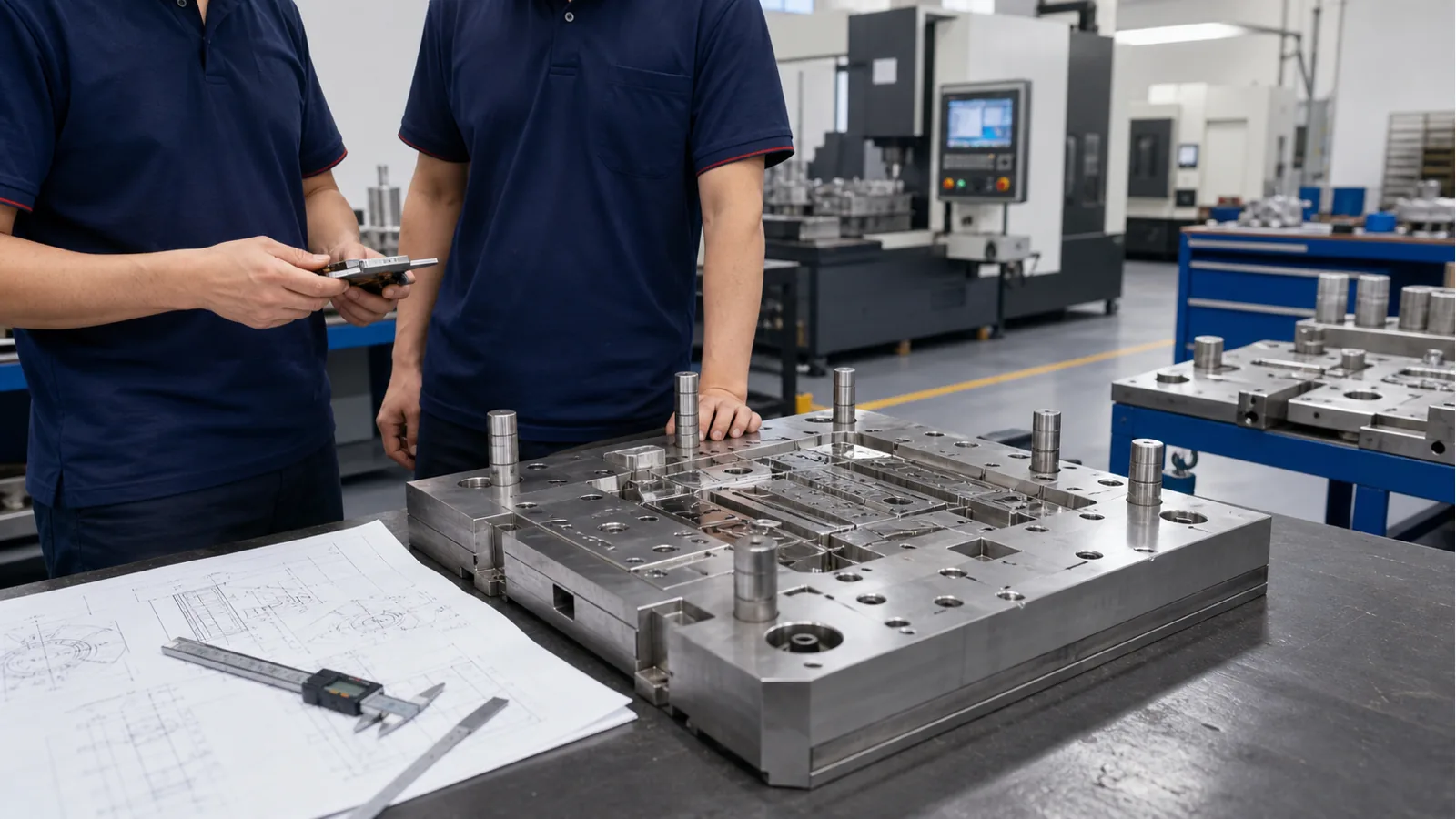
When we receive an RFQ for an injection molded part, the first question is not usually about price. We first need to understand the part, the use of the part, and the stage of the project. A short RFQ can be enough to begin that conversation if it includes the right information.
You do not need to wait until every decision is final. Send the latest files you have and mark the points that are still open. That is much more useful than asking a factory to quote from a photo with no quantity, material, or timing.
Start with the part file
A 3D CAD file is the best starting point. STEP, IGES, X_T, and other neutral formats help us look at the actual geometry rather than trying to interpret it from an image. A 2D drawing is important when it contains information the model does not show clearly.
For example, please point out critical dimensions, mating parts, threads, inserts, snap fits, sliders, undercuts, visible surfaces, and the current revision level. If one feature must fit another part or remain visible after assembly, it should be identified early.
If the design is still changing, simply say so. A current file with open questions is better than an old file presented as final.
Explain what the part needs to do
If you have a material specification, send it with the RFQ. If you do not, explain the working environment instead. Does the part need impact resistance? Will it see heat, moisture, chemicals, or outdoor exposure? Does it need to stay flexible, hold a tight assembly, or protect an internal component?
Yuming Molding commonly plans projects using ABS, PC, PC+ABS, PP, HDPE, PA6, PA66, PA66 + GF20%, POM, and TPU. The right material still depends on the actual part and its application. “Housing for a handheld product with a visible front surface and repeated clip assembly” tells us far more than “plastic part.”
Put the quantity in context
Quantity matters, but the project stage matters too. A pilot run, a bridge quantity, a repeat-production part, and a new-tooling project should not all be treated the same way.
Please tell us whether you need a new mold, production from an existing mold, a low-volume validation run, or repeat production after approval. For a new production part, start with custom injection molding. If tooling is part of the project, our plastic mold engineering page explains that route. For pilot or bridge-stage quantities, see low-volume injection molding.
Yuming Molding plans projects on 50T–350T injection machines with 1–32 cavity tooling. The actual machine and cavity plan depends on the part geometry, material, mold design, and expected demand. A larger quantity alone does not automatically make a higher cavity count the right choice.
Call out the details that cannot go wrong
Not every dimension carries the same risk. If a clip has to assemble without cracking, a sealing area must fit another part, or a front surface must meet an appearance requirement, mark it on the drawing or describe it in the RFQ.
This gives the project team a clear place to focus during the early review. It also makes the inspection plan more useful. Our quality-control process is based on the drawing and on the features identified as critical for the project.
Be clear about the mold situation
For a new mold, send the part files, material target, estimated quantity, and the date you are working toward. For an existing mold, include what you know about the tool: photos or drawings, cavity count, machine requirements, material history, maintenance information, and sample history. An existing mold still needs a technical review before a production plan can be confirmed.
Include timing, inspection, and packing in the first message
A real target date is more useful than “ASAP.” Let us know whether you are working toward a design review, sample evaluation, customer approval, or production delivery. After complete project input is received, DFM is normally planned within 1–3 working days. This is planning guidance, not a fixed production or shipping promise; final timing depends on the part, material, tooling scope, revisions, and confirmed requirements.
Please also mention inspection and packing expectations. If the parts need a sample measurement report, individual protection, part separation, labels, carton marks, or customer-specific packing, it is better to raise that before the project is quoted. Export packing can be planned with PE bags, bubble film, cartons, and pallets according to the requirement.
A practical RFQ can be simple
To start a useful review, send the latest CAD file and drawing, the part application and material requirement, estimated quantity, project stage, critical features, and target timing. If you are unsure how the work moves from RFQ through DFM, tooling, trial, inspection, and production, see our injection molding project process.
When you are ready, upload your drawings and request a quote. Send the best information you have and identify anything still under discussion. That gives us a realistic starting point for reviewing the project.
Leave a Reply