
Injection Molding Cost: Key Factors That Affect Your Project Budget
For many buyers, the difficult part of an injection molding quote is not the number itself. It is understanding why one mold plan is cheaper, why another is safer for repeat production, and which details will change the final unit price after trial and approval.
At Yuming Molding, we quote custom plastic parts for customers in the United States, Germany and other export markets. A practical budget depends on the part design, mold structure, resin, order quantity, inspection level and shipping plan. The earlier these points are clear, the more accurate the quotation will be.
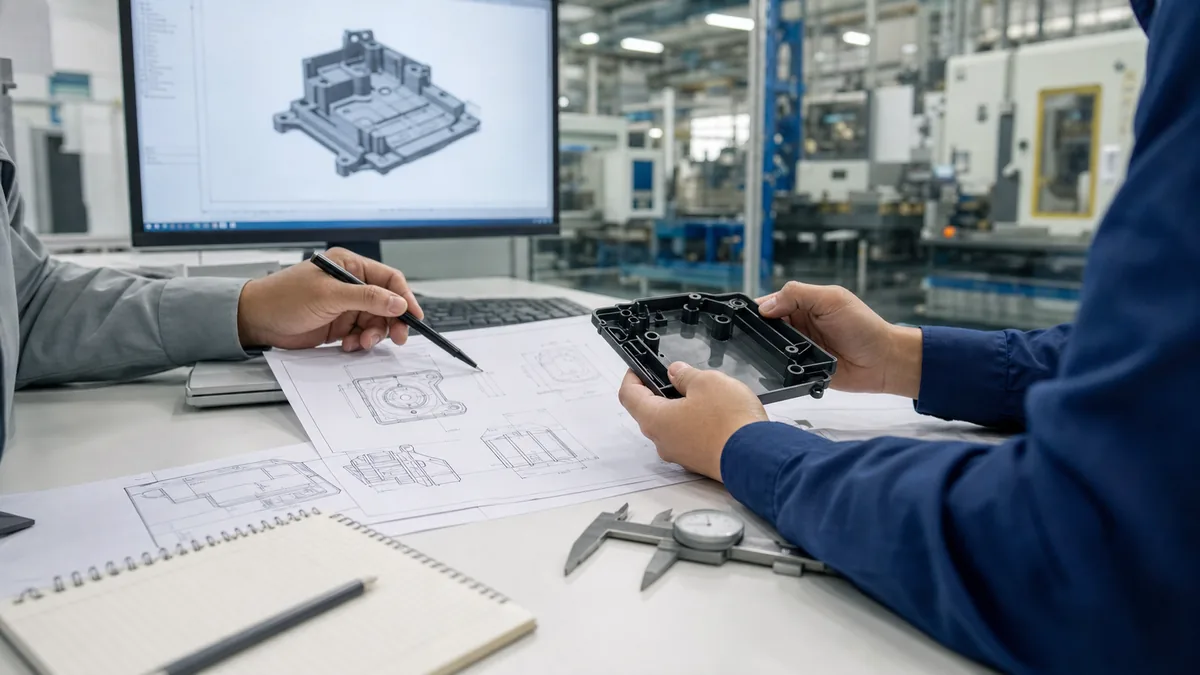
Why Injection Molding Cost Is Not Just a Mold Price
A mold quotation and a production quotation answer different questions. The mold cost covers design, steel, machining, EDM, polishing, fitting, assembly and mold trial. The part price covers resin, machine time, labor, scrap control, packaging and inspection. A buyer who compares only the mold price may miss the real cost of production over the full project life.
For B2B projects, especially industrial, automotive, electronics and medical plastic parts, we usually review both sides together: what it costs to build the tool and what it will cost to run stable parts month after month.
1. Part Design and Mold Complexity
The part drawing is the first cost driver. A simple cover with enough draft and uniform wall thickness can use a straightforward mold. A housing with clips, ribs, bosses, sealing surfaces, undercuts or tight assembly features needs more design review and a more complex mold structure.
Common features that increase cost include sliders, lifters, threaded inserts, overmolding areas, thin ribs, deep cavities, transparent surfaces, high-gloss cosmetic faces and tight shut-off positions. These details are not automatically a problem, but they need to be priced correctly before steel cutting.
2. Mold Steel, Tool Life and Cavity Plan
The mold steel should match the expected production life, plastic material and surface requirement. A prototype or low-volume tool may not need the same steel as a long-life production mold. For repeat orders, however, a weak mold plan can create downtime, flash, dimensional drift and maintenance cost later.
Cavity number also matters. A single-cavity mold is usually cheaper to build and easier to adjust. A multi-cavity mold costs more at the beginning, but it can reduce unit price when annual demand is high enough. The right choice depends on volume, forecast stability and the buyer’s approval timeline.
Yuming Molding supports injection mold manufacturing from DFM review to mold trial, including mold design, machining, assembly and sample correction.
3. Plastic Material and Resin Price
Material choice affects both part performance and molding cost. ABS, PP, PC, PA, POM, PMMA, TPU and PC/ABS all behave differently in the mold. Some resins need longer drying time, higher mold temperature, slower cycle time or better venting. Filled materials may improve strength, but they can also increase mold wear.
For German and U.S. buyers, material documentation can also matter. If the project needs UL grade, RoHS, REACH, food-contact approval, medical documentation or a specific resin brand, the resin cost and sourcing time should be checked early.
For more detail, see our plastic injection molding materials page.
4. Tolerances, Appearance and Inspection Level
Tight tolerances are sometimes necessary, especially for assembled parts, clips, gears, sealing areas and parts fitted to metal components. But tighter tolerance means more control during tooling, trial, measurement and production. It can also limit resin choice or require changes to wall thickness and gate location.
Surface finish has the same effect. A hidden industrial bracket and a visible electronics housing should not be quoted the same way. Texture, polish, color matching, weld line control and gate mark location all influence tooling work and trial time.
Our quality control process can include first article inspection, key dimension reports, visual checks, assembly review, in-process inspection and final packing inspection before shipment.
5. Production Volume and Unit Price
Injection molding becomes more cost-efficient when the production volume is high enough to spread the tooling investment across more parts. For small batches, the mold cost may be the largest part of the budget. For larger programs, cycle time, resin price, scrap rate and machine size often become more important.
| Project stage | Cost focus | Typical decision |
|---|---|---|
| Prototype or validation | Lower tooling investment, faster feedback | Simple mold plan, limited cavities |
| Low-volume production | Balance mold cost and repeat order stability | Practical steel, reliable cooling and inspection |
| Mass production | Unit price, cycle time and mold life | Stronger mold structure, possible multi-cavity tool |
If the first order is small but the future demand may grow, tell the supplier. A mold can sometimes be planned for later upgrades, or at least built in a way that avoids unnecessary rework.
6. Cycle Time, Machine Size and Part Weight
The part price is strongly affected by machine tonnage, cycle time and part weight. A larger part may require a bigger injection molding machine even if the shape is not complicated. Thick walls can increase cooling time. Long cycle time means fewer parts per hour, which raises the unit price.
Part weight also drives resin usage. For high-volume programs, even a small reduction in wall thickness or runner waste can affect the annual purchasing budget. This is why DFM review should include both moldability and cost review, not only whether the part can be molded.
7. Export Packaging, Logistics and Landed Cost
For overseas buyers, the project budget does not stop at EXW or FOB price. Packaging, carton size, pallet plan, sea freight or air freight, customs documents and delivery schedule all influence landed cost. A low unit price can lose its advantage if the packaging is inefficient or the parts are damaged during shipment.
We normally discuss packing method, part protection, carton weight and shipment plan before mass production. This is especially useful for U.S. and German buyers who need stable repeat deliveries and clear import documentation.
What Buyers Should Prepare for an Accurate Quote
A reliable quotation starts with clear project information. If available, send 3D files in STEP, STP, IGES, X_T or SLDPRT format, 2D drawings with tolerances, material requirement, estimated annual quantity, target order quantity, surface finish, color, assembly information and quality requirements.
- Part drawings and 3D files
- Target plastic material and any compliance requirement
- Estimated quantity per order and per year
- Appearance, texture, color and tolerance requirements
- Application environment and assembly details
- Packing and export shipping expectations
You can also review our plastic injection molding services and custom injection molding pages to understand how we support custom projects from DFM to production.
Final Thoughts
A good injection molding cost review should explain the reason behind the price. The lowest mold quote is not always the lowest project cost, especially when the part needs repeat production, stable dimensions, cosmetic control or export delivery. A clear mold plan, realistic material choice and early DFM review can reduce cost risk before the project reaches production.
Need a realistic injection molding budget?
Send your drawings, material, quantity and application details. Yuming Molding can review moldability, tooling approach, production cost drivers and quality risks before quotation.
Leave a Reply