
Blow Molding Project Support
Custom Blow Molding Services for Hollow Plastic Parts
In-house custom blow molding for hollow plastic parts, with DFM, tooling, sampling, inspection and repeat production support. Send drawings or product photos for a practical review.
Upload Files & Get a Quote
Email Project Details
Reply within 12 working hours
Confidential project-file handling
NDA available on request
Start a Project Review
Request a Blow Molding Quote
Send a drawing, product photo, sketch or sample description. Include size or capacity, intended use, material preference, estimated quantity and testing needs when available. Select “Blow Molding” in the form below.
No final CAD file yet? You can start with a clear photo or sketch. NDA available on request.
Service Overview
A Practical Route for Hollow Plastic Components
Blow molding is suited to hollow products where part geometry, material distribution, neck or opening details and final testing must be considered together. We review the project information before confirming the process route, tooling plan and production assumptions.
The first discussion can begin with a CAD file, 2D drawing, physical sample or clear product photos. If the design is still early, include the application, target capacity or dimensions, expected quantity and performance requirements.
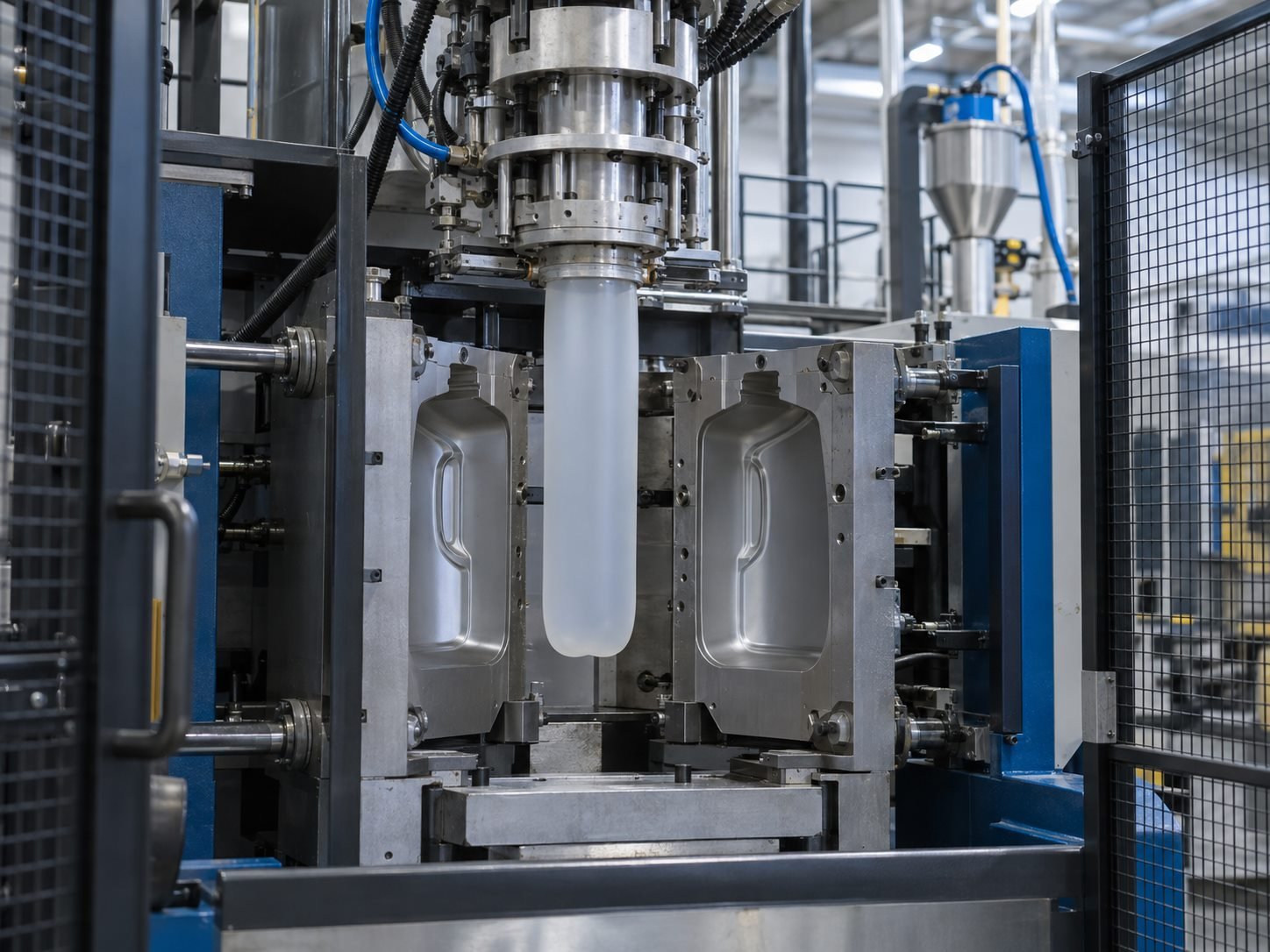
Illustrative process image used for project discussion; equipment and project route are confirmed individually.
Project Fit
Information That Shapes a Blow Molding Project
Product use, nominal size or capacity, openings, handles, ducts, mounting features and assembly interfaces.
Preferred resin, color, chemical exposure, temperature, stiffness, impact and appearance requirements.
Prototype or sample needs, first order quantity, expected annual volume and repeat-order planning.
Neck and thread details, sealing surfaces, wall distribution, parting line, pinch-off and trimming areas.
Dimensional, weight, fit, leak, pressure, drop or functional checks required for the application.
Trimming, drilling, assembly, labeling, part protection, cartons and overseas packing requirements.
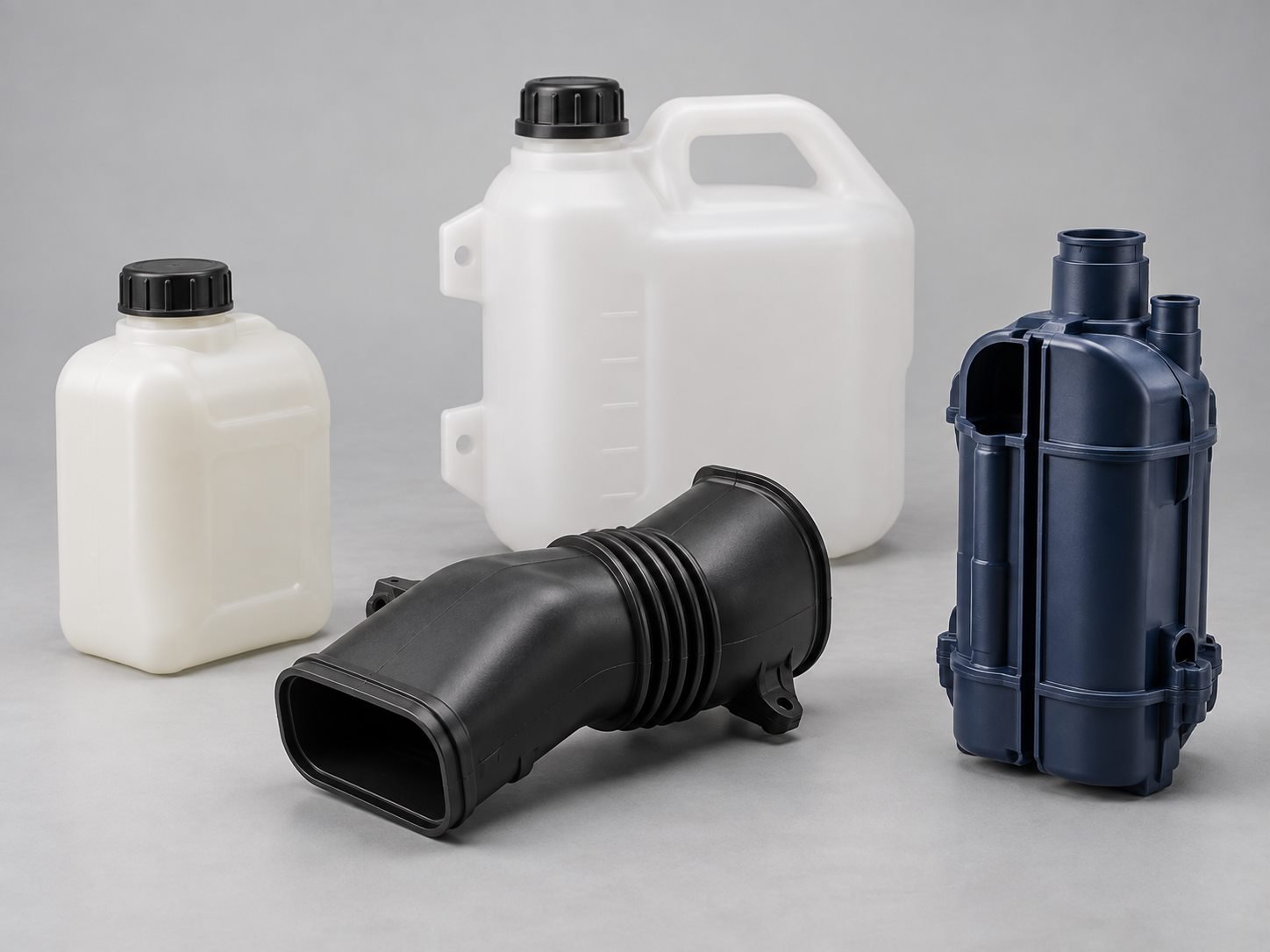
Illustrative examples of blow-molded product categories; not a claim that every pictured design is a completed Yuming project.
Applications
Custom Parts Beyond Standard Bottles
Blow molding may be considered for containers and technical hollow parts where an enclosed internal volume, low part weight or integrated hollow geometry is important.
- Industrial containers and reservoirs
- Handled bottles and dispensing packs
- Air ducts and fluid-routing parts
- Protective hollow housings
- Double-wall technical components
- Custom OEM hollow plastic parts
Send the actual design or sample before assuming that blow molding is the best route. Some geometries may be more suitable for injection molding, rotational molding or an assembled solution.
Engineering Review
DFM Points Reviewed Before Tooling
Wall Distribution
We discuss likely stretching, thin areas and the relationship between geometry and material distribution.
Parting and Pinch-Off
Parting-line position, pinch-off areas, flash removal and visible-surface requirements are considered early.
Radii and Draw Depth
Sharp corners, deep features and difficult transitions are reviewed for thinning and forming risk.
Necks and Openings
Threads, sealing surfaces, inserts, caps and connection features are checked against the intended use.
Cooling and Stability
Part geometry, wall variation and cooling needs are discussed where they may influence warpage or cycle stability.
Trimming and Assembly
Trim lines, holes, secondary machining, joining and assembly interfaces are included in the project plan.
Project Workflow
From RFQ Review to Repeat Production
RFQ Review
Drawings, sample photos, application, resin, quantity and test requirements are collected.
Feasibility and DFM
The process route, wall distribution, parting line, openings and manufacturing risks are discussed.
Tooling Plan
Mold structure, cavities, inserts, cooling, trimming and sample requirements are defined for quotation.
Tooling and Trial
The mold is prepared and trial parts are reviewed for forming, appearance, dimensions and function.
Sample Approval
Feedback, adjustments and agreed inspection points are documented before repeat production.
Production and Packing
Approved requirements guide production checks, quantity verification and export packing.
Inspection Planning
Checks Based on the Drawing and Application
Inspection requirements should reflect how the hollow part will be filled, sealed, assembled, transported and used. The exact inspection plan is agreed against the customer drawing and project specification. See our quality control approach for the wider project framework.
| Review Area | Typical Project Discussion |
|---|---|
| Incoming and setup | Material identification, color and approved process assumptions. |
| Dimensions and weight | Critical dimensions, neck or opening geometry, part weight and assembly fit. |
| Appearance | Parting line, flash, trim quality, surface marks, color and contamination. |
| Function | Leak, pressure, drop, sealing or application-specific checks when required. |
| Packing | Quantity, labels, part separation, cartons and protection for overseas shipment. |

Illustrative inspection image. The actual inspection method follows the approved drawing and project requirements.
RFQ Preparation
What to Send for a Practical Review
- 3D CAD, 2D drawing or clear product photos
- Part dimensions, nominal capacity or physical sample
- Preferred material, color and application environment
- First order quantity and expected annual volume
- Neck, thread, cap, sealing or assembly requirements
- Leak, pressure, drop or other testing requirements
If some information is not ready, send the current design and intended use. We will identify the missing inputs needed for the next review step. You can also review how we handle confidential RFQ files.
FAQ
Custom Blow Molding Questions
What files are useful for a blow molding quotation?
STEP, STP, IGES, X_T or SLDPRT files are preferred. A 2D drawing, sample, product photo, target dimensions, resin, quantity and application can also support an early review.
Which blow molding process will be used?
The process route depends on the product geometry, material, neck or opening, production volume and performance requirements. We confirm the suitable route after reviewing the project information.
Can you review an existing sample without a complete CAD file?
Yes. Send clear photos, overall dimensions, material information and the intended use. A physical sample can be discussed when more detailed evaluation is required.
What information affects tooling and part cost?
Part size and geometry, resin, cavities, opening or thread details, trimming, annual volume, inspection, secondary operations and packing can all affect the quotation.
Can leak or functional testing be included?
Testing can be reviewed when the customer provides the required method, acceptance criteria and application conditions. The agreed checks should be documented before production.
How quickly will Yuming Molding reply?
Our engineering team replies within 12 working hours after receiving the project information. This is a response-time commitment, not a guaranteed tooling or delivery schedule.
Start a Confidential Review
Send Your Blow Molding Drawing, Product Photo or Sample Details
Include the application, preferred material, dimensions or capacity, expected quantity and testing needs when available. We will review the practical manufacturing points and reply by email.