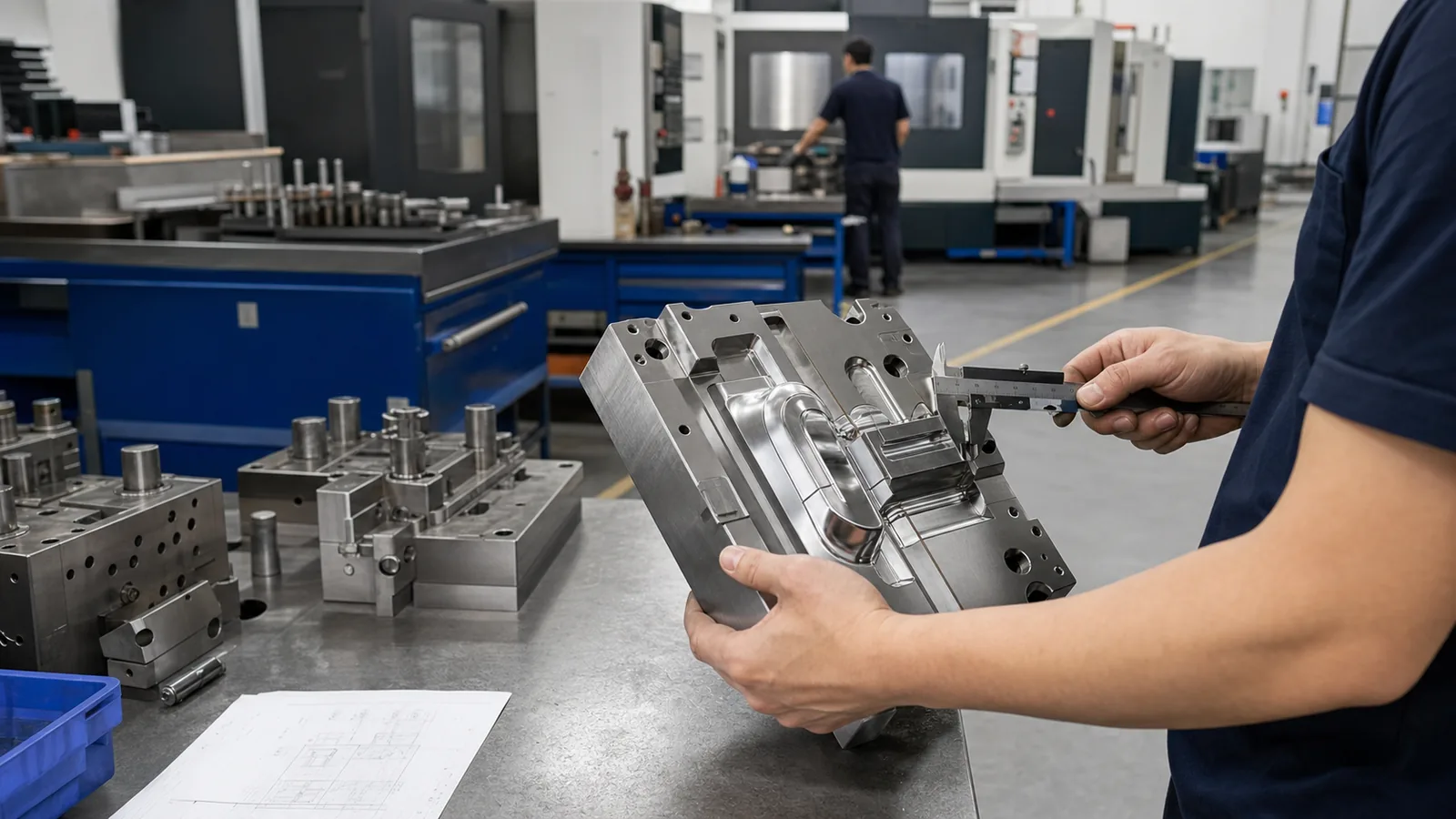
Prototype Injection Molding for Design Validation and Trial Samples
Turn CAD data into parts that can be reviewed for fit, function, material choice and assembly before the next project decision is made.
Prototype Parts Should Answer Real Engineering Questions
A prototype is most useful when it helps the team make a decision. It may be used to review fit with mating components, assembly, material behavior, dimensions, appearance or the next mold design step.
Before selecting the route, define what the prototype needs to prove. This keeps the review focused on the actual risk in the part.
Tell us what needs validation
- 3D CAD file or drawing
- Intended material
- Critical dimensions or tolerance requirements
- Assembly or functional questions to validate
- Surface finish, quantity and target timing
Start With a DFM Review
A clear file set lets engineering issues be considered before material and tooling decisions are made.
DFM First
DFM analysis is normally planned within 1-3 working days after complete project information is received.
What Is Reviewed
The review considers the available drawing, material requirement, part geometry, mold structure and customer requirements.
Clearer Next Step
The goal is to identify the suitable prototype route before quoting and before the next project decision.
Choose the Route That Fits the Project
For projects where a 3D printed prototype is appropriate, planning is typically 3-7 days. For projects requiring an injection mold, mold construction is generally planned at 30-45 days, with first mold trial at 35-50 days.
The appropriate route depends on what must be validated, the material requirement, the part geometry and whether the project is moving toward repeat molded production.
Material Options for Functional Evaluation
Available materials include ABS, PC, PC+ABS, PP, HDPE, PA6, PA66, PA66 + GF20%, POM and TPU.
Material should be selected based on the part’s intended application, functional requirements, assembly conditions and drawing specification.
Injection Capability and Dimensional Validation
| Project area | Prototype planning range |
|---|---|
| Injection and tooling | Our injection molding range includes 50T-350T machines, including Tederic D250 and D350 equipment. Tooling support covers 1-32 cavity molds. |
| Dimensional and assembly checks | Inspection can cover dimensions, assembly and trial-sample checks according to the customer drawing. General dimensions are typically planned at ±0.10-0.20 mm. Precision dimensions may be planned at ±0.05-0.10 mm. |
| Acceptance | Final acceptance requirements are confirmed according to the drawing and the functional needs of the part. Prototype tooling and cavity planning can be reviewed with later production in mind. |
Questions Before Prototype Work Starts
Is a 3D printed or injection-molded prototype more suitable?
It depends on what needs to be validated. A 3D printed prototype may be appropriate for some projects, while an injection-molded part is appropriate when the project requires a molding route, selected material and trial-sample evaluation.
How quickly can DFM feedback be provided?
DFM analysis is normally planned within 1-3 working days after complete project information is received.
How are prototype dimensions checked?
Inspection can cover dimensions, assembly and trial-sample checks. General dimensions are typically planned at ±0.10-0.20 mm, while precision dimensions may be planned at ±0.05-0.10 mm.
Can a prototype project be planned toward later production?
Yes. The material, mold structure and cavity plan can be reviewed with the intended next production stage in mind.
Turn your CAD file into a practical prototype plan.
Send the file and explain what the prototype needs to prove. We will review the suitable next step before quoting.

Talk to Yuming Molding
Send drawings or project details.
For molds, samples or plastic parts production, contact our team directly.
- WhatsApp+86 137 2678 8989
- Emailguangzhouyuming@gmail.com
- Phone+86 137 2678 8989