
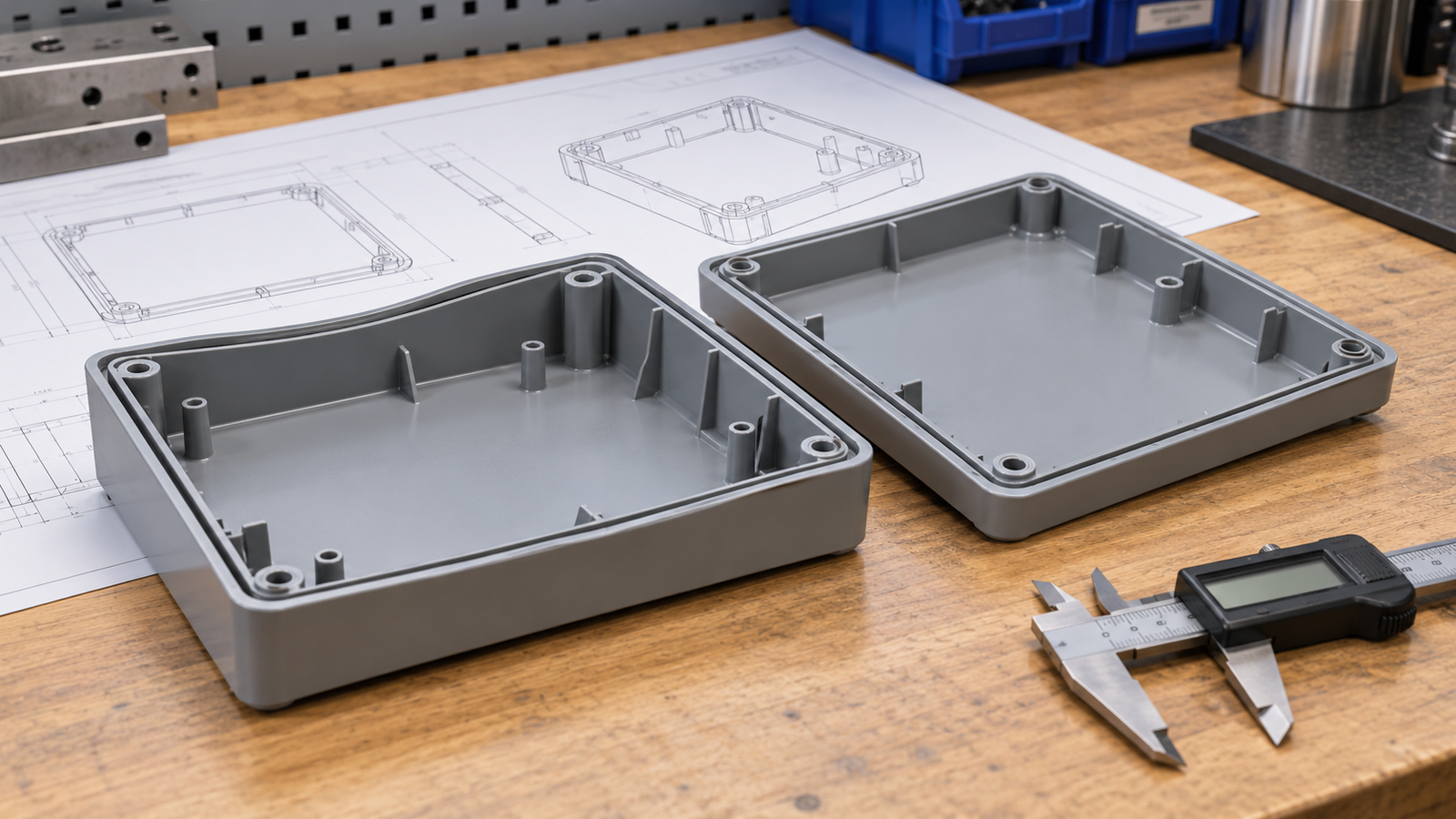
A plastic part can look correct in a CAD model and still create problems during mold trials or assembly. A housing may not close evenly. A visible surface may show a sink mark. A thin feature may fail to fill, or a part that passed an early sample check may vary during repeat production.
These symptoms do not all have the same cause. Part geometry, material, gate and cooling design, molding conditions, and inspection requirements need to be reviewed together. Here are four problems worth discussing before a new mold is finalized—and what information helps an injection molding supplier investigate them.
1. Warpage and parts that do not fit together
Warpage matters most when it affects function. A slight change in the shape of a cover may shift a hole, open a gap along a mating edge, or make a clip difficult to engage. Checking one dimension on its own may not show why the full assembly fails.
Uneven shrinkage, cooling differences and material orientation can all contribute to warpage. The right response depends on which factor is driving the specific part, as explained in Autodesk’s Moldflow guidance.
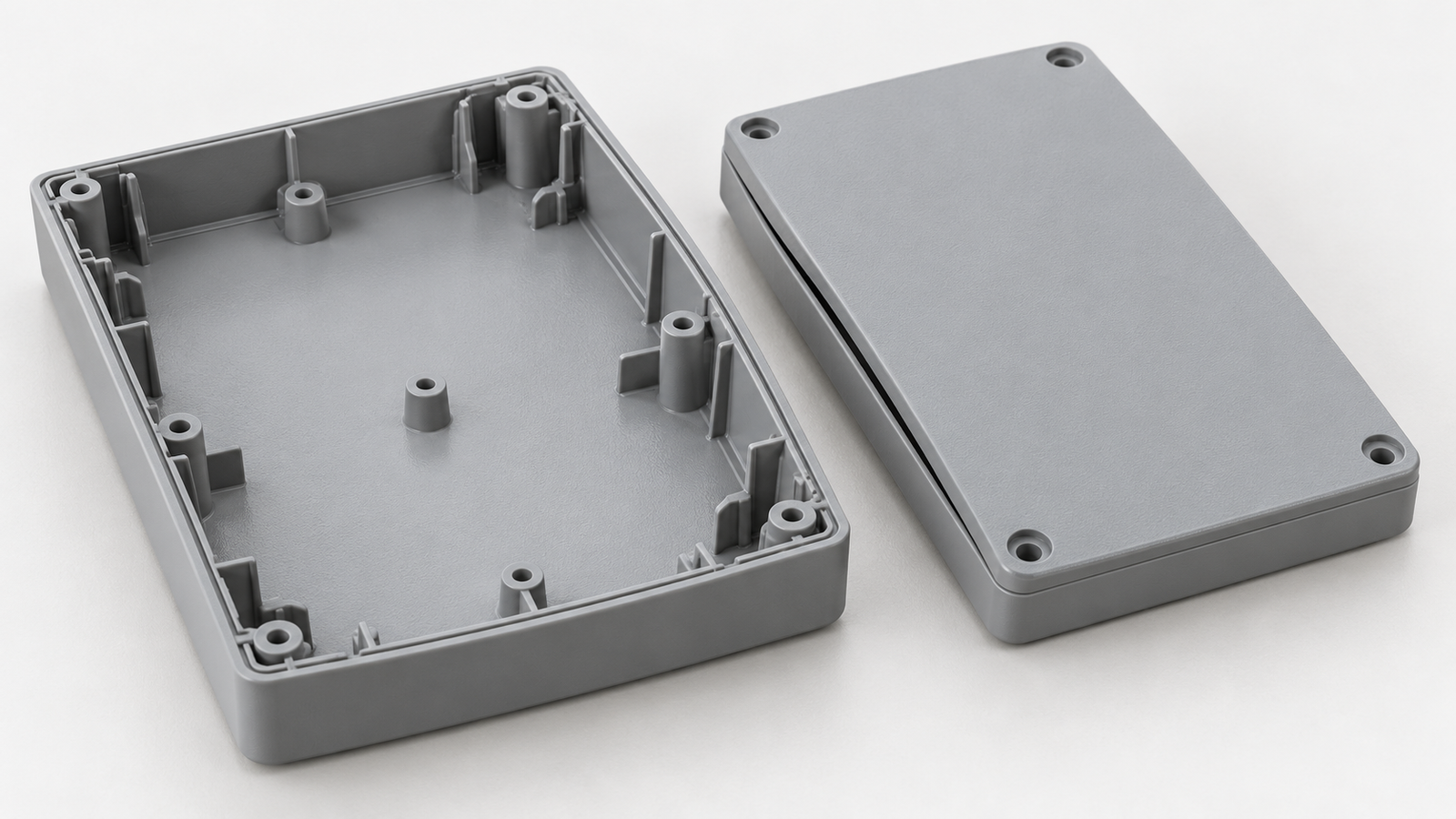
During design review, we look at wall thickness transitions, ribs, gate and cooling plans, material choice, and the features that control assembly. For a two-piece product, share both part models and identify the mating surfaces, hole positions, clips or hinges that must work together. Our PC electronics enclosure case study shows why assembly accuracy and hinge requirements need to be considered as part of the tooling and production plan.
2. Sink marks near bosses and ribs
A sink mark is a shallow depression on a molded surface. It is especially noticeable when a screw boss or rib sits behind a visible face. The cosmetic problem may point to a thicker local section that cools and shrinks differently from the surrounding wall. Autodesk’s troubleshooting guide describes several possible design, packing and cooling factors.
Before tooling, mark the surfaces customers will see and identify the internal features behind them. A DFM review can then consider whether the boss or rib geometry, wall transition, gate plan or tooling approach should change. During a mold trial, the actual samples and process information help determine the next step. A surface texture alone should not be treated as a substitute for investigating the cause.
3. Short shots and features that do not fill completely
A short shot leaves part of the cavity unfilled. On a functional part, a missing edge, clip or thin feature can make the sample unusable even when the rest of the part looks acceptable.
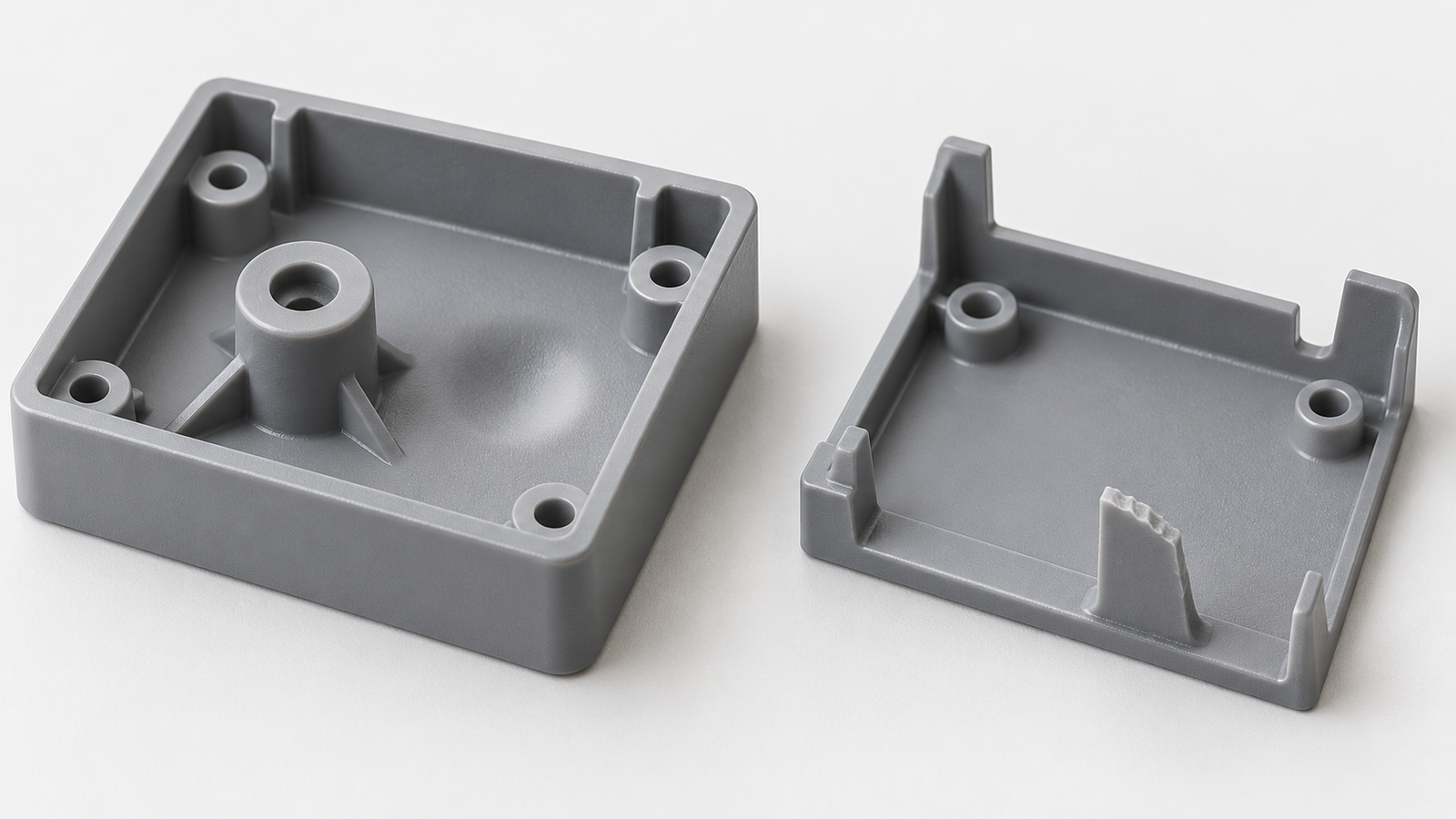
The investigation should start with the location of the incomplete fill and the conditions under which it appears. Part thickness, flow length, gate position, venting, resin and molding settings may all need review. The team can then evaluate changes through a controlled mold trial instead of assuming that more pressure is the answer to every short shot.
For a new project, show us thin sections, distant features and any areas that must remain strong after assembly. For an existing mold, include sample photos and the mold and material information available. These details help distinguish a design or tooling question from a processing question.
4. Samples pass, but production parts vary
Sample approval is a milestone, not the end of quality control. Critical dimensions, visible surfaces and assembly fit still need attention during repeat production. A part can meet a general appearance expectation while missing the one feature that matters to the finished product.
Define those features on the drawing before production: which dimensions are critical, which faces are cosmetic, what the part must assemble with, and how it will be checked. Yuming Molding’s quality-control process covers first-article, in-process and final inspection aligned with project requirements. Inspection points and records should be agreed for the actual part rather than assumed from a generic checklist.
What to send for a useful engineering review
If you are developing a new molded part—or investigating an existing problem—send the latest 3D model and 2D drawing you have. Include the specified material or working environment, estimated quantity, mating-part information, critical dimensions and target appearance. If samples already exist, add clear photos that show the defect location and describe when it occurs.
You do not need a complete diagnosis before contacting a supplier. The useful starting point is a clear description of what the part must do, what is going wrong, and which requirements cannot change. From there, the part design, mold plan, trial results and inspection method can be reviewed together.
For custom plastic parts, Yuming Molding supports injection molding, DFM review, mold manufacturing, trials and production inspection. Upload your drawings and project details to start an engineering review.
Leave a Reply