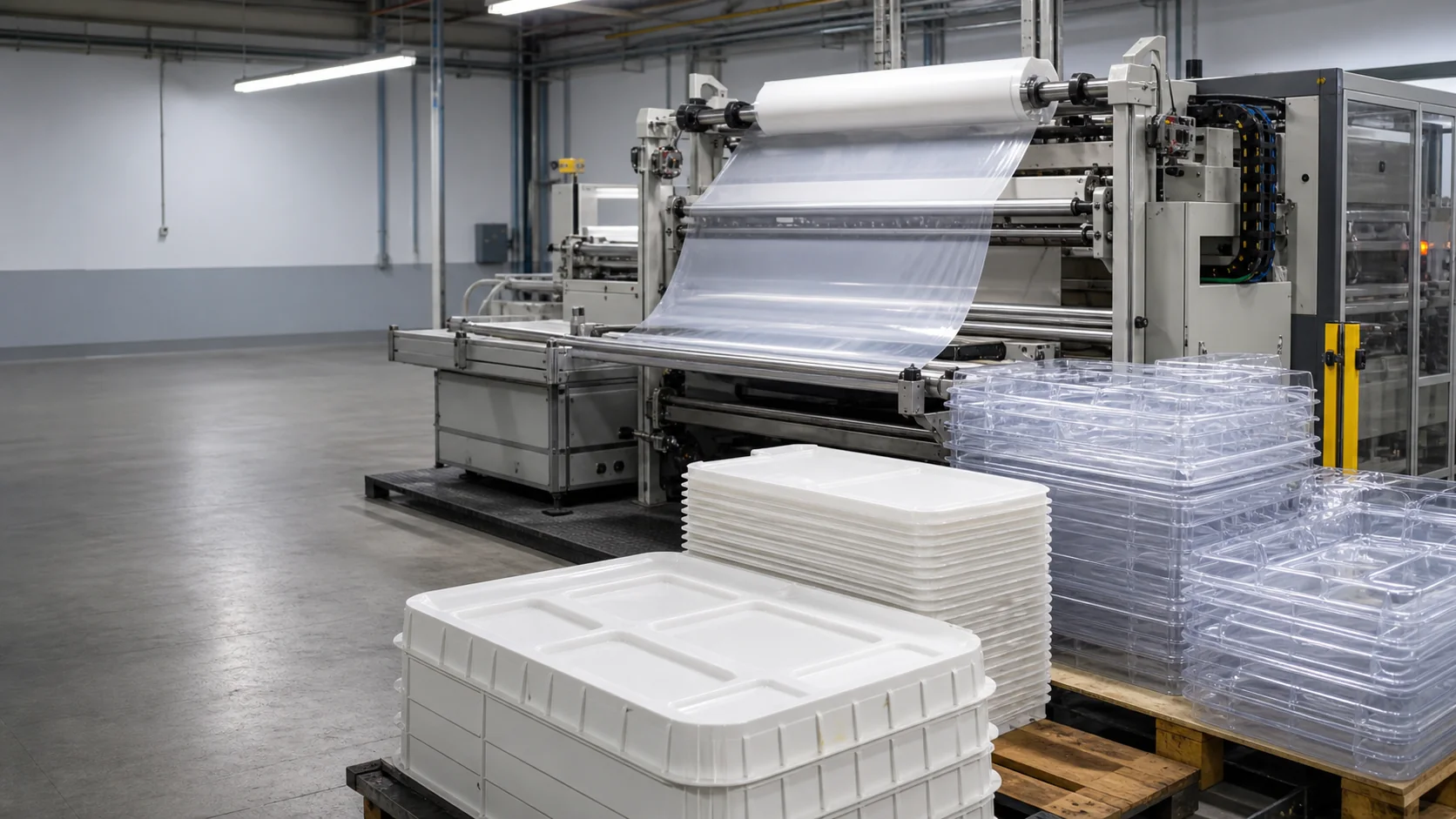
Plastic Thermoforming Services for Custom Formed Parts
Yuming Molding supports plastic thermoforming projects for formed trays, covers, panels, packaging parts and protective plastic components. We review material, thickness, tooling, trimming, appearance and packing requirements before quotation.
Thermoforming Support for Practical Plastic Projects
Thermoforming is suitable for many plastic parts made from heated sheet material. It is often used when buyers need formed trays, covers, panels, display parts, packaging inserts or lower tooling cost compared with complex injection molds.
Before quoting, we check the part size, plastic sheet material, wall thickness, draft, trimming edge, surface requirement, quantity and packing method. If injection molding is a better option for the part, we will explain the difference during RFQ review.
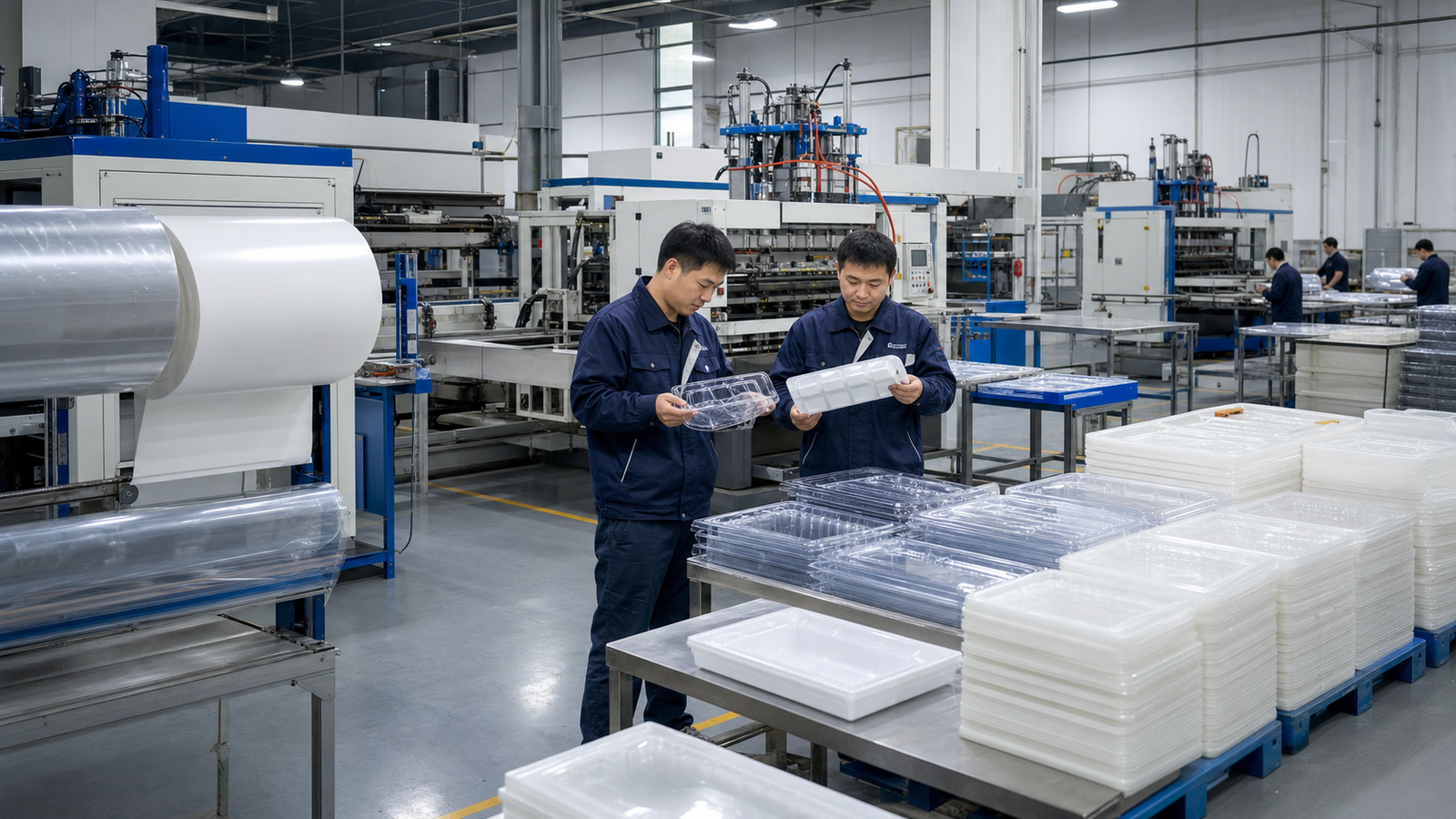
Typical Thermoformed Plastic Parts
Thermoforming is commonly used for larger, thinner or tray-like parts where the geometry is formed from sheet material and then trimmed.
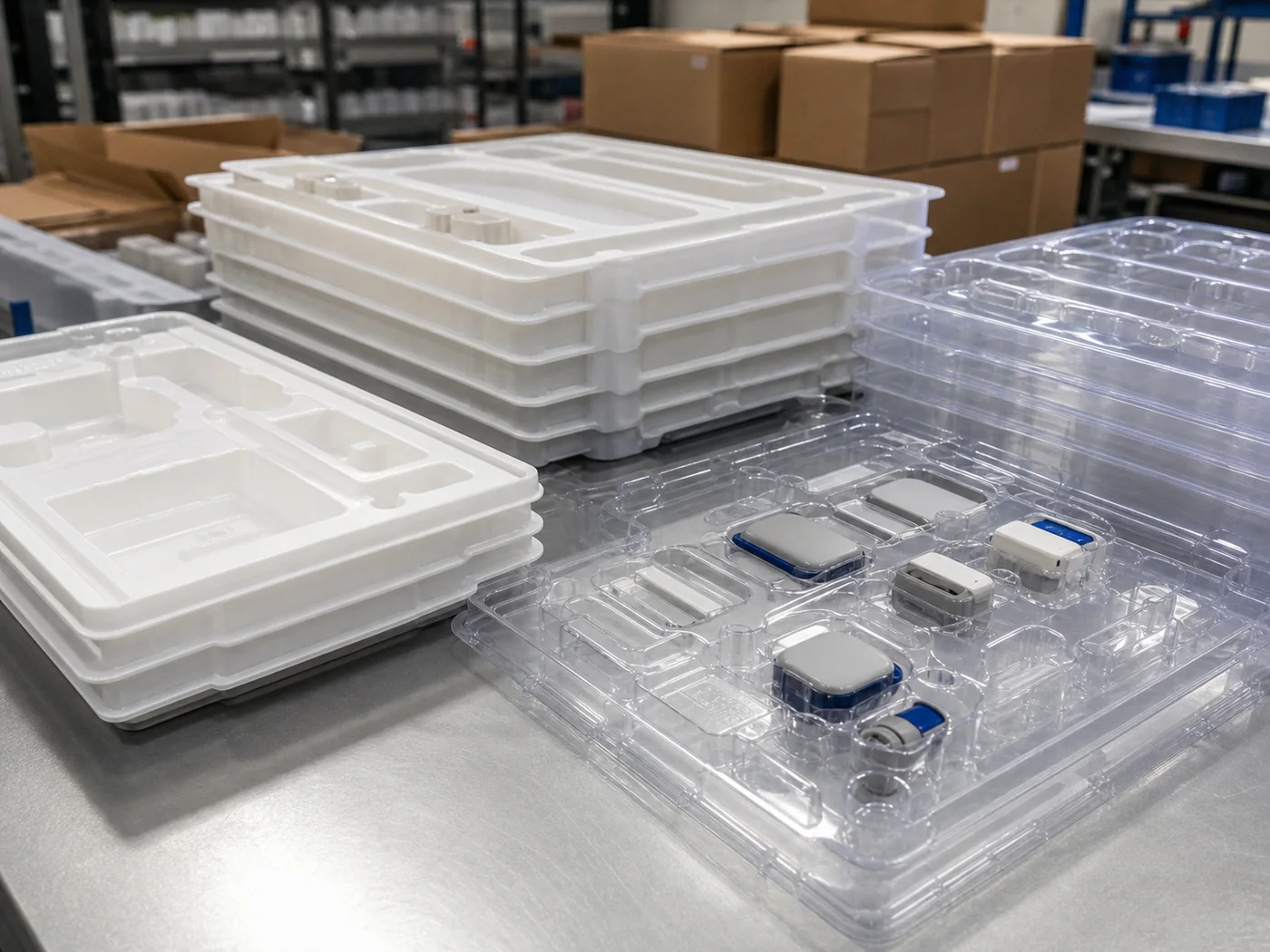
Plastic Trays and Inserts
Custom trays, protective inserts and handling trays for components, electronics, medical products or industrial parts.
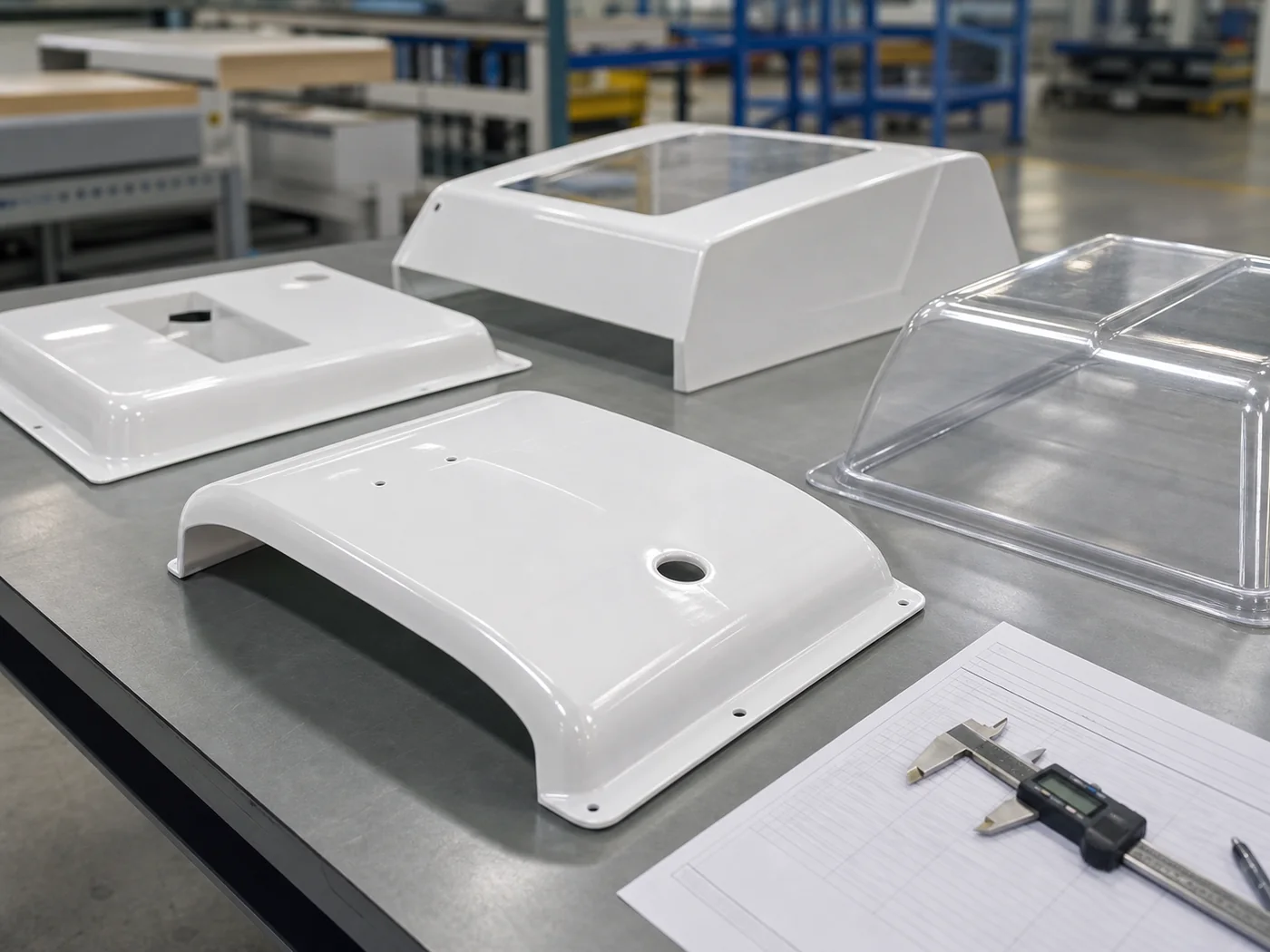
Covers and Panels
Formed plastic covers, machine guards, appliance panels and housings where sheet thickness and surface finish matter.
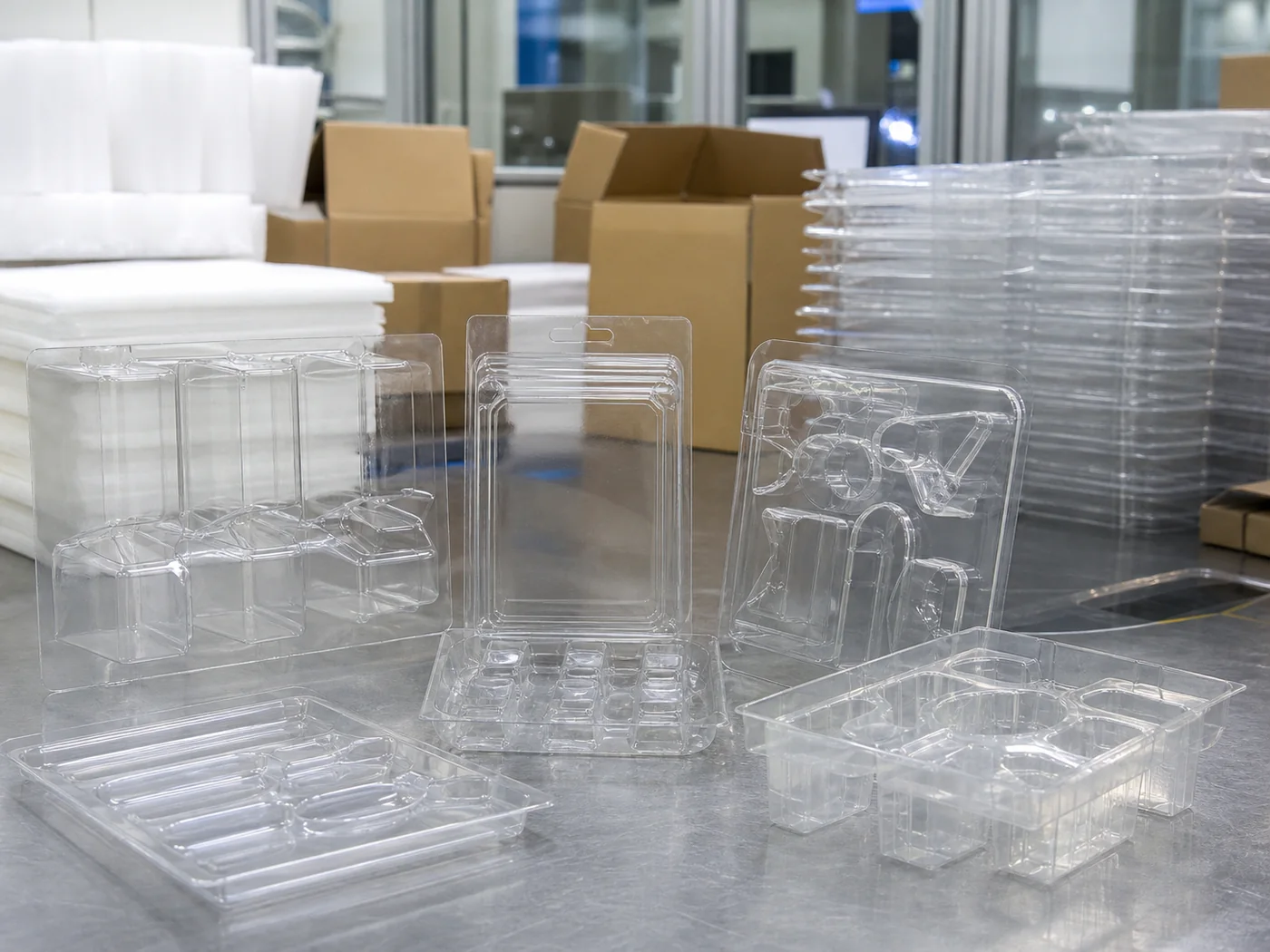
Packaging and Display Parts
Retail packaging, blister-style components, display trays and export packing supports for molded or assembled products.
Thermoforming Project Workflow
A controlled process helps reduce problems around material thickness, forming depth, trimming accuracy and packing protection.
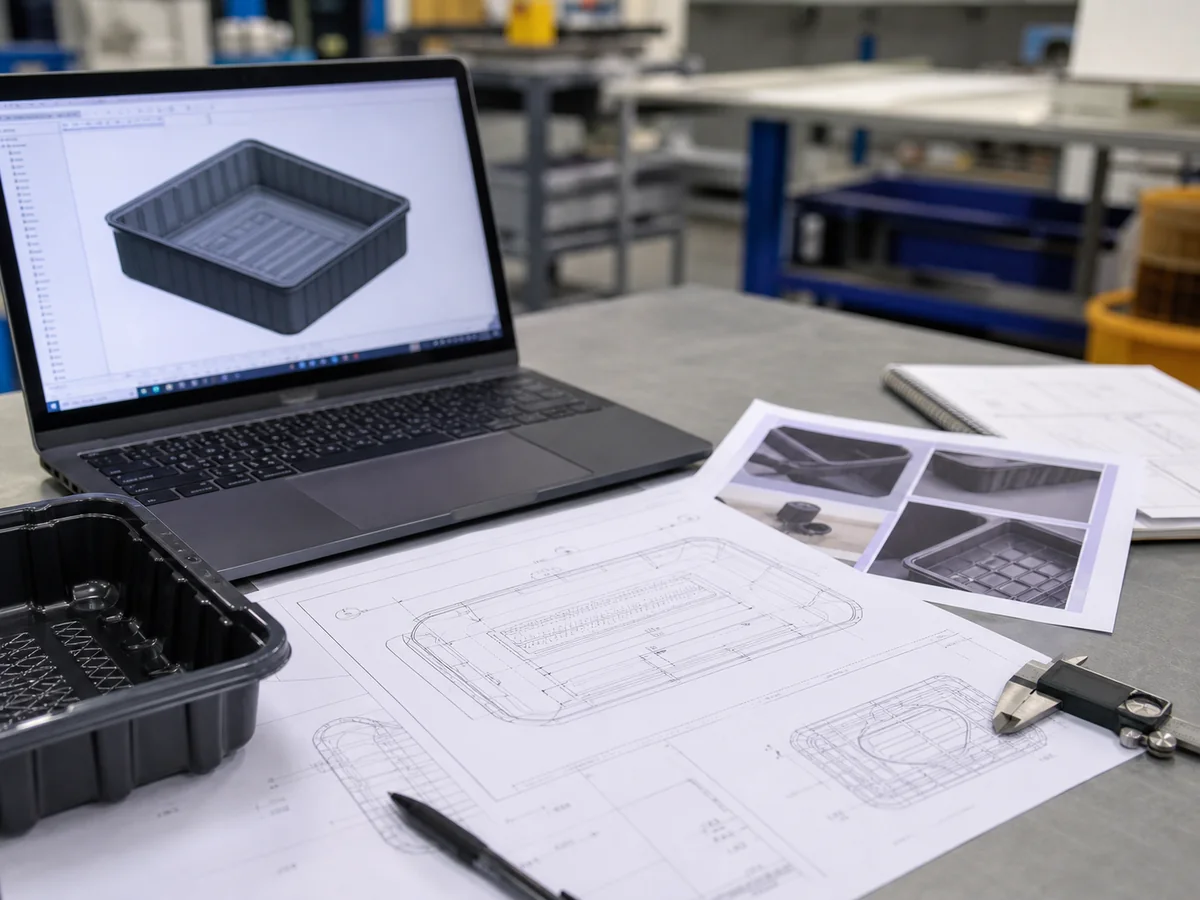
We review drawings, samples, part size, material, thickness and quantity.
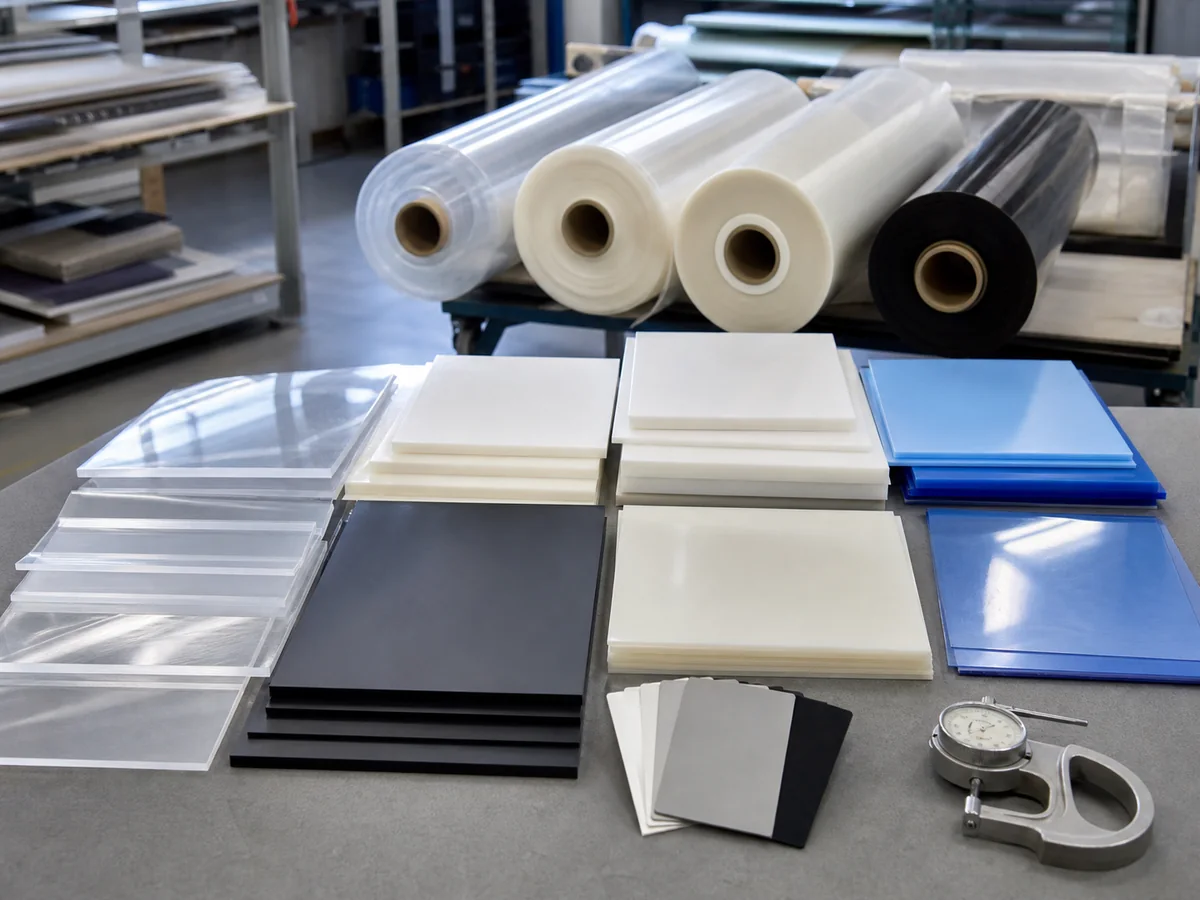
ABS, HIPS, PET, PETG, PP, PC, PMMA or other sheet materials are discussed.
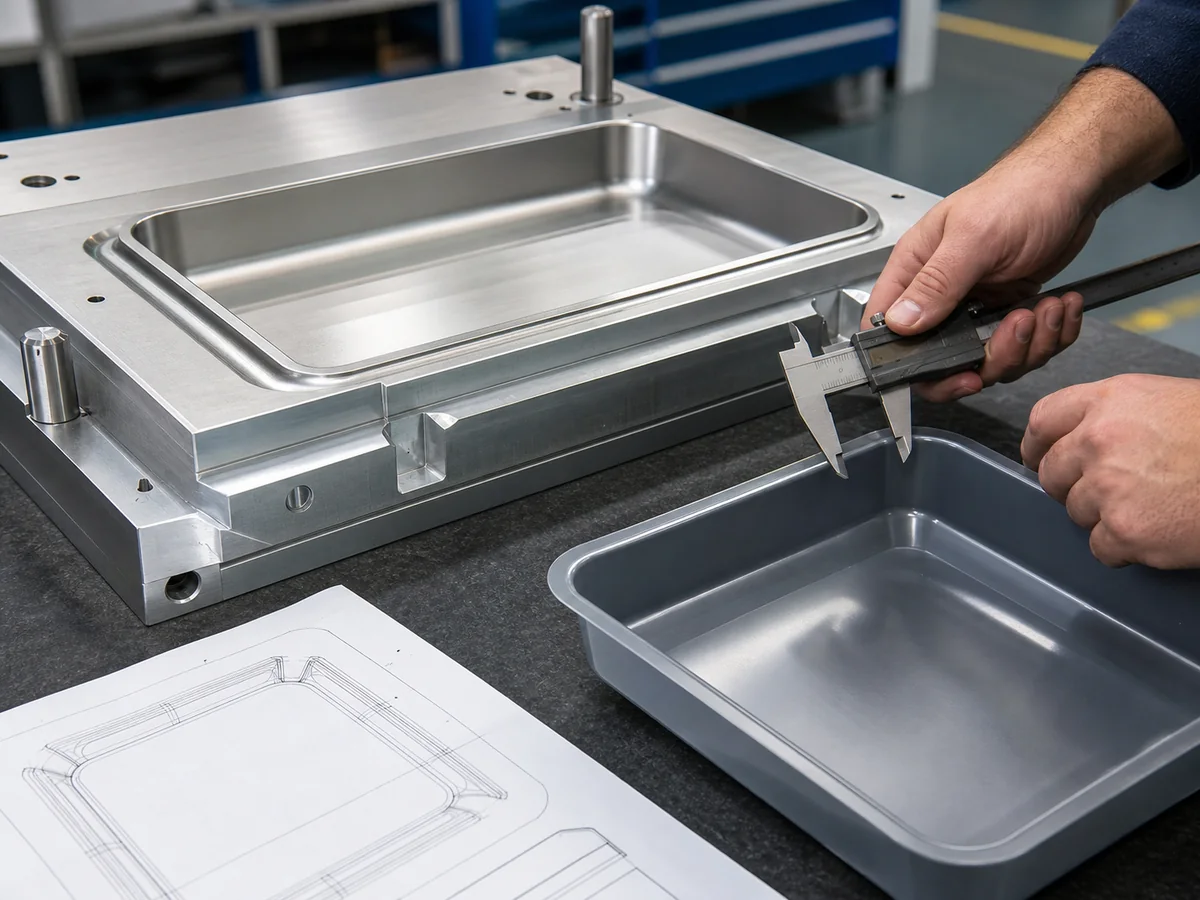
Forming tool, draft, radii, undercut risk and trimming method are confirmed.
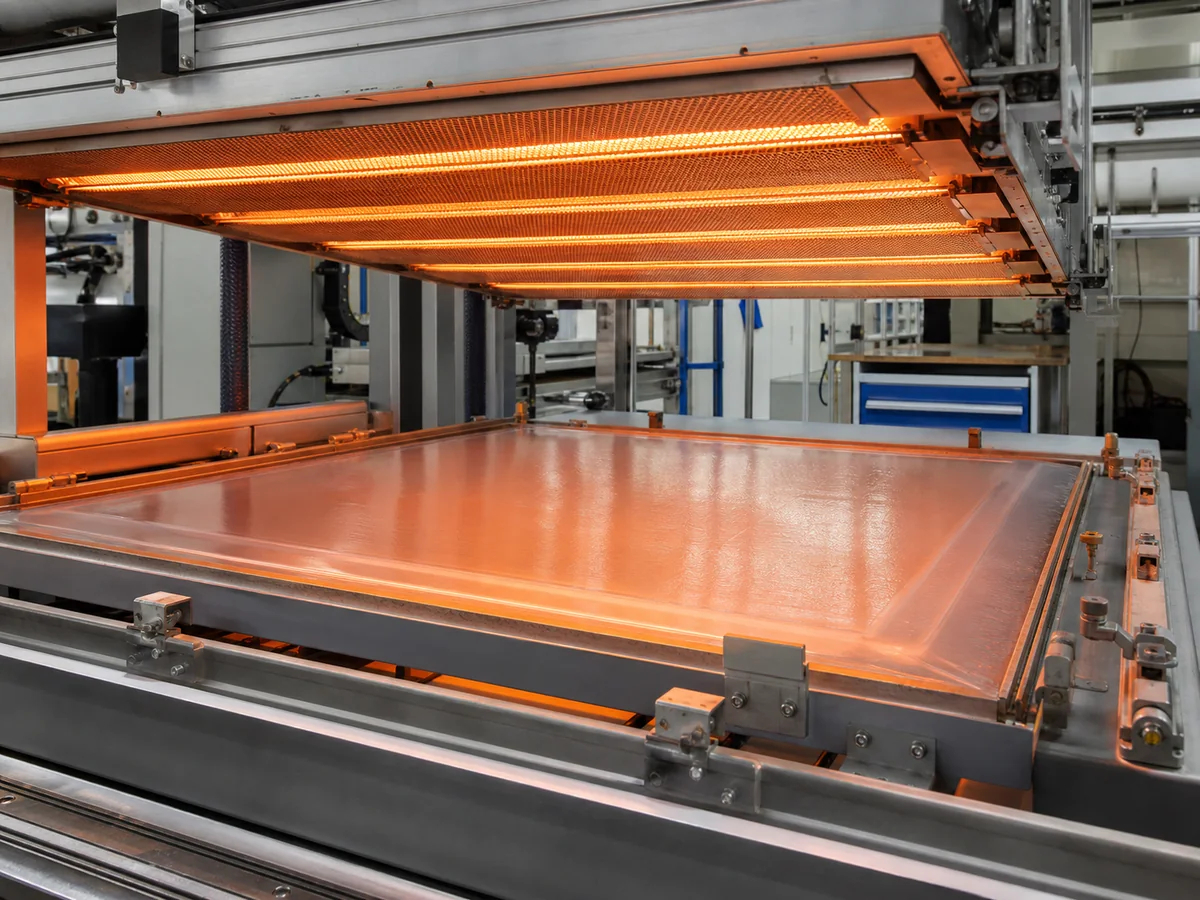
Plastic sheet is heated according to material behavior and forming depth.
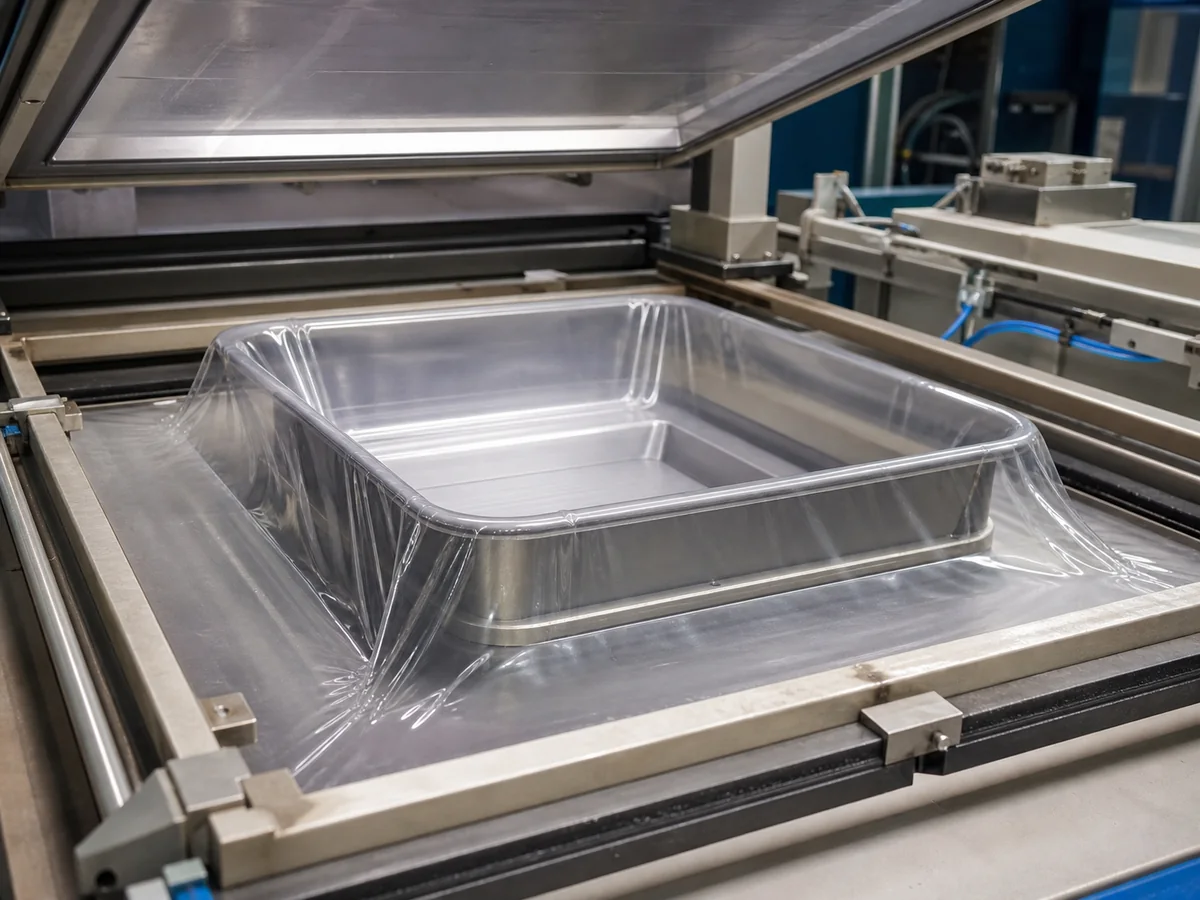
The sheet is formed over or into the tool using vacuum, pressure or matched tooling depending on the part.
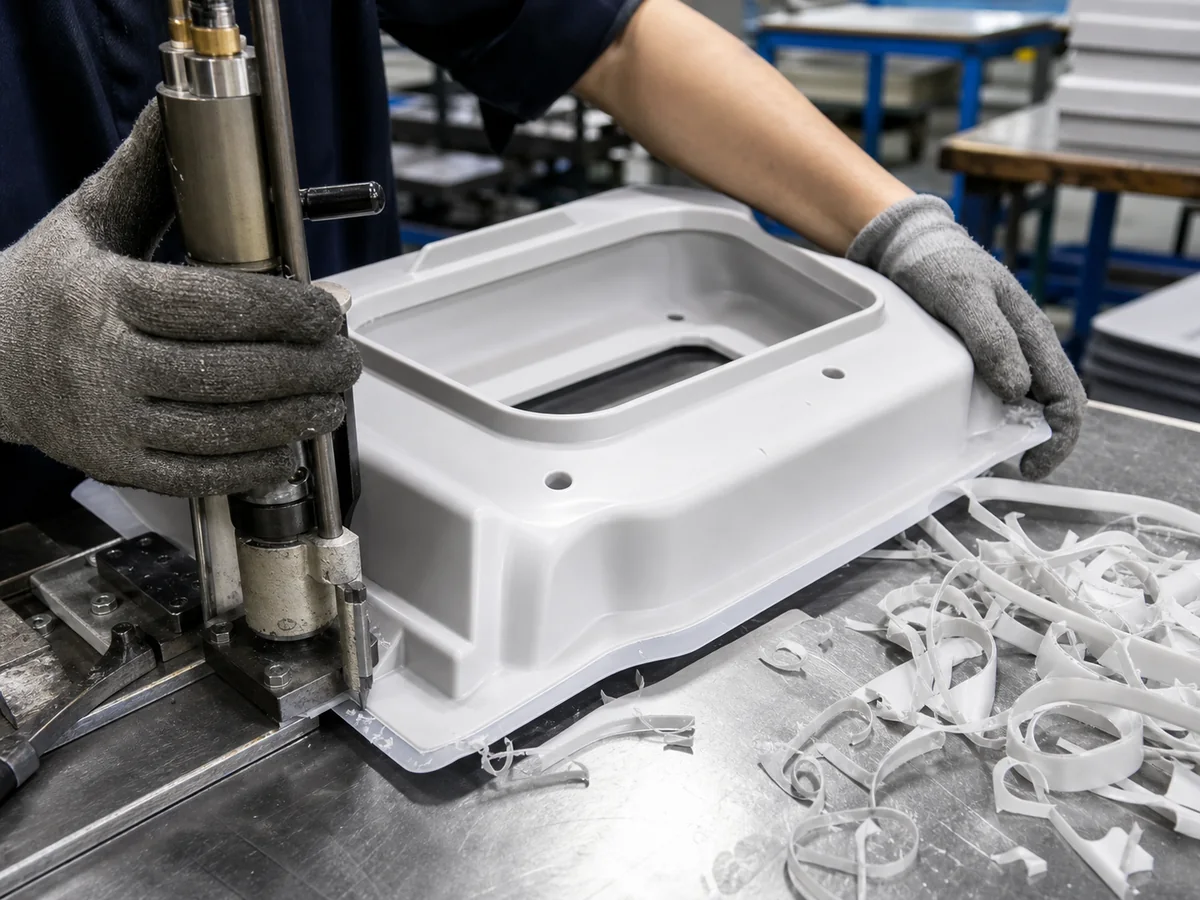
Edges, holes and openings are trimmed according to the drawing or sample.
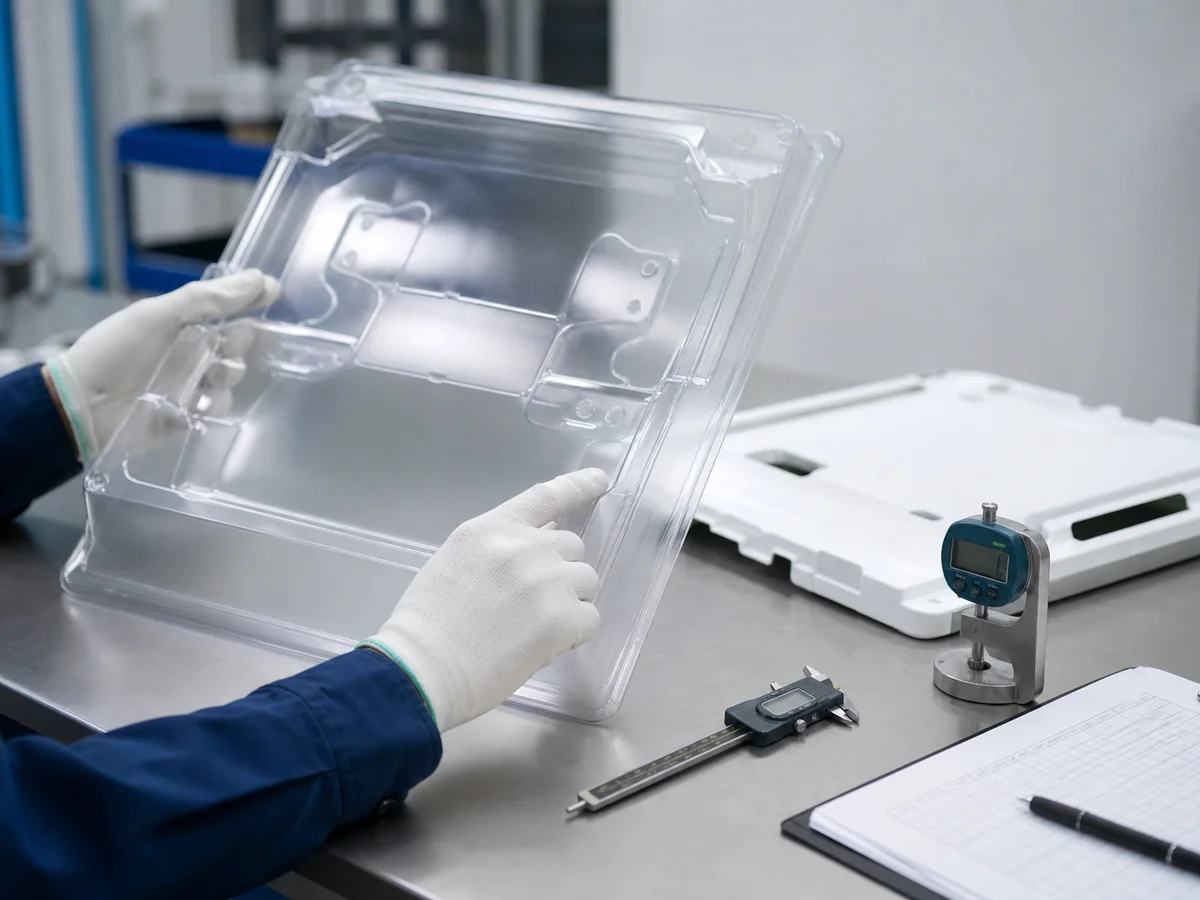
Appearance, thickness, fit, edge quality and packing condition are checked.
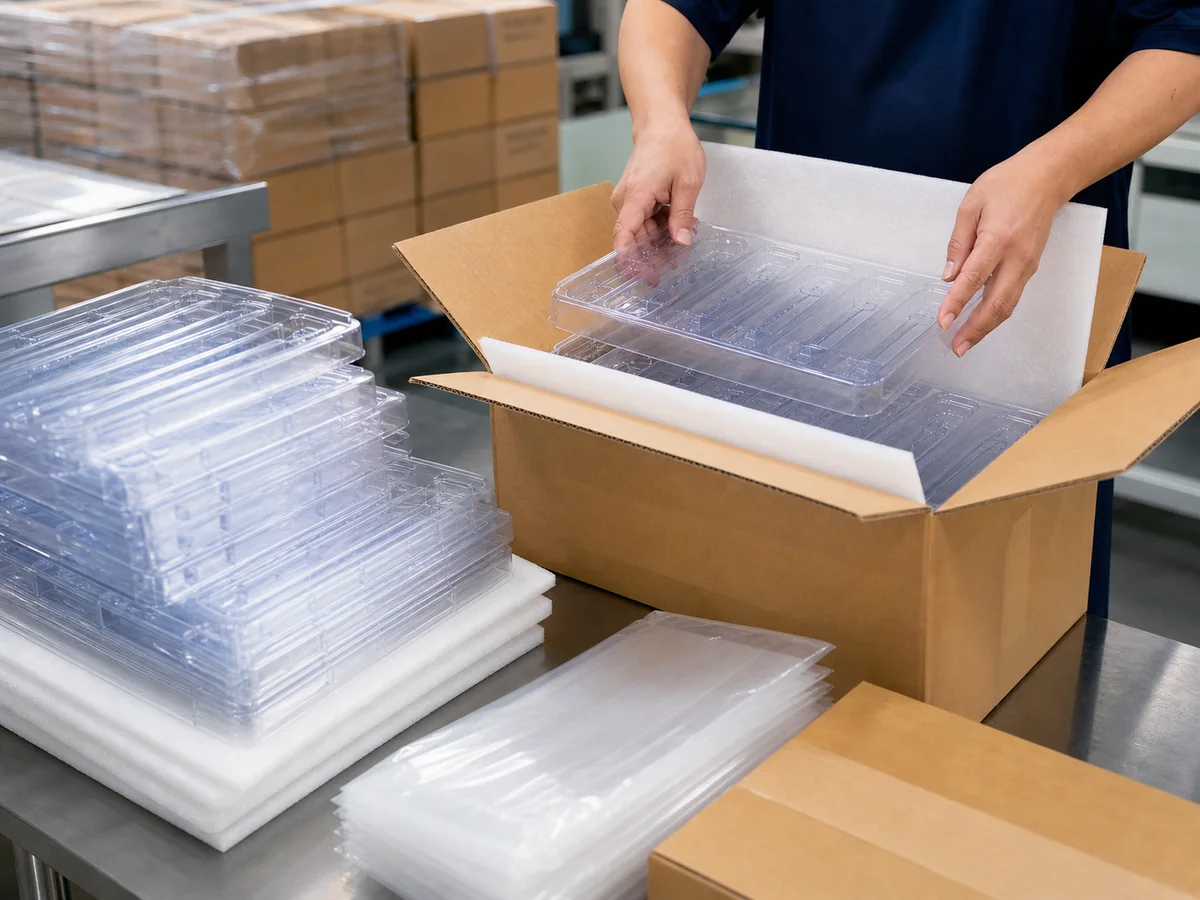
Parts are stacked, protected and packed for shipment or assembly.
Thermoforming Material Selection for Real Production
Material selection affects forming depth, wall thickness, trimming quality, appearance and packing strength. During quotation, we review both the part function and the production risks instead of only matching a material name.
ABS
Used when the part needs better impact strength, stable appearance, texture options and practical trimming quality.
HIPS
A common choice for formed packaging and inserts where cost, stiffness, forming depth and surface appearance must be balanced.
PET / PETG
Selected for transparent parts, but we need to check scratch risk, forming clarity, edge condition and packing protection.
PP
Useful for lightweight and chemical-resistant parts. We pay attention to shrinkage, warpage, forming temperature and flexibility.
PC / PMMA
Used for clear covers or panels where optical appearance, surface protection and forming temperature are important.
Material Review
If you are not sure which sheet material is suitable, send the application, samples or drawings. We can compare practical options before tooling.
What We Confirm Before Tooling
- 1Sheet thickness and expected final wall thickness after forming
- 2Draw ratio, draft angle, corner radius and formed depth
- 3Trimming line, hole positions, edge quality and burr risk
- 4Surface texture, transparency, color and visible appearance
- 5Stacking, nesting, carton packing and export protection
- 6Whether thermoforming or injection molding is the better process
Thermoforming vs. Injection Molding
Both processes can produce plastic parts, but they are used for different shapes, quantities and cost targets.
| Item | Thermoforming | Injection Molding |
|---|---|---|
| Starting material | Plastic sheet | Plastic resin pellets |
| Best for | Trays, covers, panels, packaging, larger thin-wall parts | Complex housings, clips, brackets, precision parts and high-volume molded components |
| Tooling cost | Usually lower for simpler formed parts | Higher, but stronger for complex geometry and repeat production |
| Detail level | Good for formed shapes and trimmed outlines | Better for ribs, bosses, snaps, threads and precise molded features |
| Production review | Sheet thickness, forming depth, trimming and appearance | Gate, cooling, shrinkage, ejection, cavities and cycle time |
Inspection Before Packing and Shipment
For thermoformed parts, quality control focuses on appearance, forming consistency, trimming accuracy and packing protection.
- Incoming sheet material and thickness review
- First article inspection after forming and trimming
- In-process checks for surface defects, warpage and edge condition
- Fit or stacking review when parts need nesting or assembly
- Final inspection before export packing
Send Thermoforming Project Details
Please include drawings, sample photos, material, sheet thickness, quantity and packing requirements.
Plastic Thermoforming FAQ
What files should I send for thermoforming quotation?
3D files, 2D drawings, PDF drawings, product photos or physical sample information are helpful. Please also include material, sheet thickness, quantity and surface requirements.
Which materials can be thermoformed?
Common options include ABS, HIPS, PET, PETG, PP, PC and PMMA. The right material depends on appearance, stiffness, transparency, impact strength, temperature and cost target.
Is thermoforming cheaper than injection molding?
For larger, thinner and simpler formed parts, thermoforming tooling can be more economical. For complex features, tight tolerances, ribs, bosses or high-volume precision parts, injection molding may be better.
Can you help decide between thermoforming and injection molding?
Yes. Send the part drawing, expected quantity and application. We can review the process risk and explain which option is more practical for your project.
Need a thermoforming quote?
Send drawings, photos, sheet material, thickness and quantity. We will review the project before quoting.

Talk to Yuming Molding
Send drawings or project details.
For molds, die casting, thermoforming or plastic parts production, contact our team directly.
- WhatsApp+86 152 1722 5027
- Emaillongguojun2@gmail.com
- Phone+86 152 1722 5027